
Hair Transplant Consultations Near Prosper, Texas
If you are exploring hair restoration in Prosper, Texas, a hair transplant consultation can help you understand whether a procedure may suit your pattern of hair loss, goals, and health history. During an appointment, a qualified hair-restoration professional may review your scalp, discuss how your hair loss has changed over time, and assess the donor area that could be used for transplantation. You can also ask about available techniques, such as follicular unit extraction or follicular unit transplantation, and how each approach may affect planning, recovery, and scarring.
A consultation is an opportunity to discuss realistic expectations, including the possibility that results take months to develop and that future hair loss may influence long-term planning. Ask about the provider’s training, experience, before-and-after examples, risks, recovery instructions, follow-up care, and a written estimate of fees. Not everyone is a suitable candidate, and a clinician may recommend medical treatment or another option instead. Residents of Prosper can compare qualified practices in the surrounding North Texas area and consider travel time for evaluation and follow-up visits. Bring a list of medications, relevant medical information, and questions so the discussion can focus on your needs. An in-person assessment is typically needed for personalized advice; online information cannot determine candidacy or predict a specific result.
Explore hair restoration options near Prosper
Residents of Prosper, Texas, can begin by looking for hair restoration providers in Prosper and nearby North Dallas communities, such as Frisco, McKinney, and Plano. Availability and services vary, so confirm directly with each practice whether it offers consultations, what type of clinician conducts them, and whether an in-person or virtual visit is available. Comparing options across the area may help you find a provider whose approach, location, and follow-up arrangements work for you.
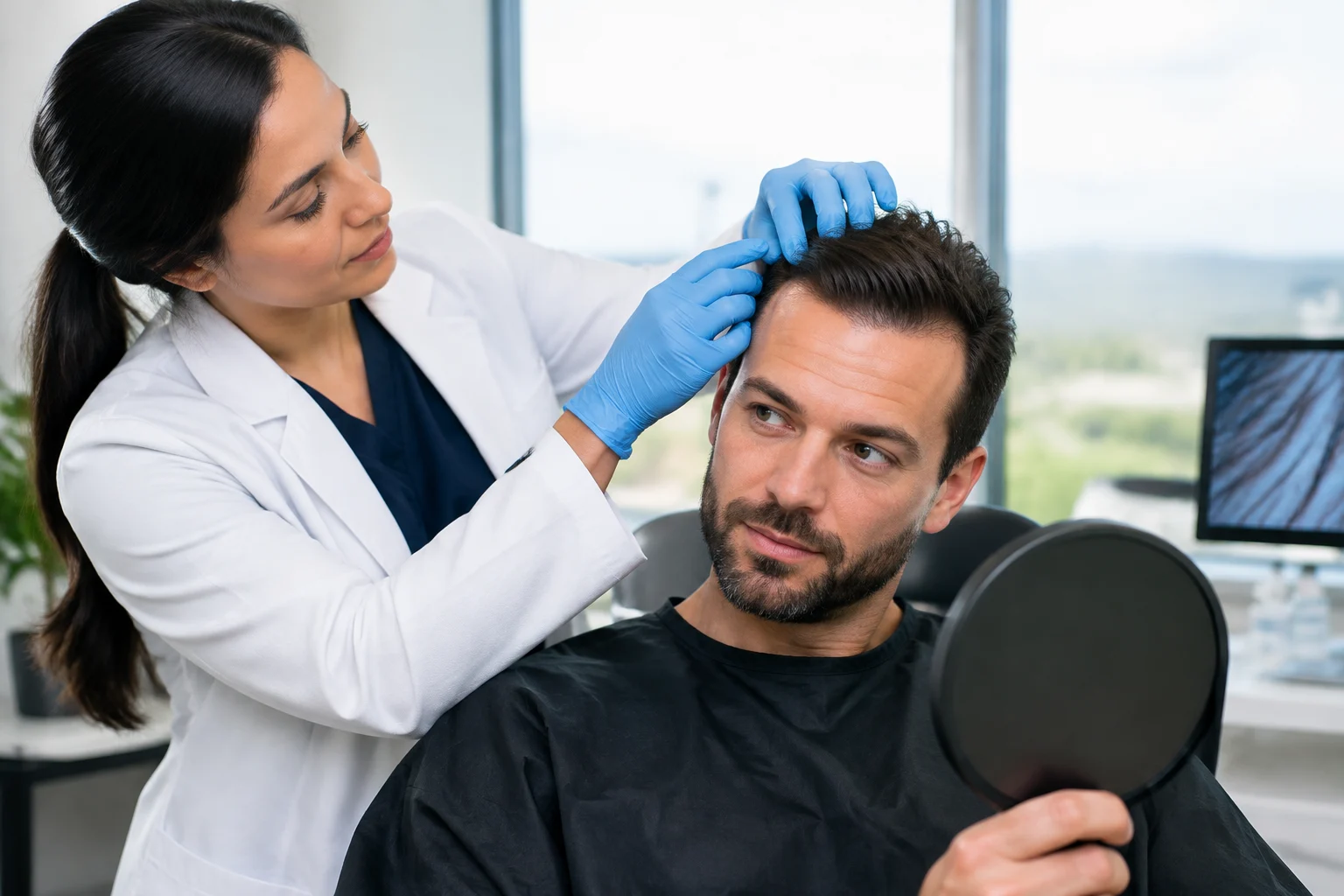
A hair transplant consultation is an opportunity to understand the possible causes of hair loss and discuss whether surgery is worth considering. A clinician may review your medical history, examine your scalp and donor hair, ask about the timing and progression of hair loss, and discuss your expectations. Depending on your situation, the provider may recommend further evaluation or discuss nonsurgical approaches instead of, or before, a transplant.
What to discuss during your consultation
Come prepared to describe when you first noticed hair loss, any changes over time, relevant health conditions, medications, and previous treatments. Photos that show how your hair has changed can help provide context, though the clinician will determine what evaluation is needed. Be open about your goals, including the areas you hope to address and how you feel about future hair loss.
Useful questions to ask include:
- What may be contributing to my hair loss, and should I have any additional evaluation?
- Am I a suitable candidate for a transplant, based on my donor hair and pattern of loss?
- Which techniques do you offer, and what are their potential benefits and limitations?
- What results are realistic for my circumstances, and how might hair loss continue over time?
- What are the possible risks, recovery considerations, and follow-up requirements?
- What is included in the quoted cost, and could additional visits or treatments involve separate fees?
Understanding candidacy, treatment, and recovery
Hair transplantation generally involves moving hair follicles from a donor area to areas affected by thinning or hair loss. A provider can explain whether a technique such as follicular unit extraction or follicular unit transplantation is offered and appropriate for you. These approaches differ in how follicles are collected and can involve different considerations for scarring, recovery, and planning. No method guarantees a particular appearance, and the amount of available donor hair can limit what is possible.
Results develop over time rather than immediately. Your clinician should explain what to expect after the procedure, how to care for the scalp, when to return for follow-up, and when you can resume usual activities. Ask how the practice handles questions or concerns during recovery, especially if you would be traveling from Prosper to a nearby community for care. Discuss the full financial picture before deciding, including consultation charges, procedure fees, and any recommended follow-up or additional treatment.
Choosing a provider near Prosper
When comparing hair transplant providers, look for clear information about the clinician’s qualifications, experience, consultation process, and follow-up care. Ask who will perform each part of a procedure and how your care would be coordinated. A thorough consultation should leave room for questions, explain alternatives and risks, and avoid pressuring you to make a quick decision. You can also ask how the practice evaluates candidacy and whether recommendations are personalized rather than based on a standard package.
Before scheduling, confirm the practice location, appointment format, travel requirements, and policies directly with the provider. If you are considering more than one option, taking notes can make it easier to compare recommendations and costs. The right next step may be a transplant, another hair-loss treatment, or simply monitoring changes with a clinician’s guidance. A careful evaluation helps you make a more informed choice for your needs.
Hair Restoration Care for Prosper Residents
Prosper is part of the growing North Texas area, and residents may consider providers both within town and in neighboring communities. Depending on where a practice is located, an appointment may involve a drive toward Frisco, McKinney, Plano, or another nearby destination. Check current locations, appointment availability, and travel details with the provider rather than assuming a specific service is offered nearby. If in-person travel is inconvenient, ask whether an initial virtual consultation is available and whether later visits must take place at the clinic.
A local consultation can be useful for people balancing work, family, and other commitments because it gives them a chance to discuss options before making a treatment decision. Ask about appointment length, what information to bring, follow-up expectations, and how many visits may be involved. Hair restoration is a personal medical decision, so take time to understand candidacy, realistic outcomes, risks, costs, and alternatives. Residents can compare more than one qualified provider and choose the approach that best fits their health needs and schedule.
Frequently Asked Questions About Hair Transplant in Prosper, Texas
Who is a good candidate for a hair transplant in Prosper?
Candidacy depends on the cause and pattern of hair loss, the amount and quality of donor hair, overall health, and realistic expectations. A consultation should include a scalp and hair-loss assessment and discussion of whether loss is stable or still progressing. Some people may be better served by treating an underlying condition or considering nonsurgical options first. A qualified clinician can explain whether surgery is appropriate for your individual situation.
What is the difference between FUE and FUT hair transplant procedures?
FUE removes individual follicular units from a donor area, while FUT removes a narrow strip of scalp from which follicular units are separated. Both methods can place grafts into areas affected by hair loss, but they differ in how donor hair is harvested and may leave different types of scarring. The right approach depends on factors such as hair characteristics, donor capacity, hairstyle preferences, and treatment goals. Ask a clinician to explain the trade-offs for you.
How much does a hair transplant cost?
The cost varies with the number of grafts needed, the procedure selected, the complexity of the case, and what is included in the treatment plan. Because these details are personal, a reliable estimate generally requires an assessment rather than a standard price based only on location. When comparing options in or near Prosper, ask for a written breakdown of fees, follow-up care, and any separate costs, and clarify what could change the estimate.
How much time should I take off work after a hair transplant?
Time away from work depends on the procedure, your role, how you feel afterward, and your clinician’s instructions. Desk work may be manageable sooner than work involving strenuous activity, heat, dust, or safety equipment that contacts the scalp. Expect some visible healing signs for a period, and ask how to care for grafts and when to resume exercise, washing, and normal routines. Follow the clinic’s specific aftercare guidance rather than relying on a general timeline.
When will I see results from a hair transplant?
A transplant does not create an immediate finished look. Transplanted hairs commonly shed during early healing, and visible regrowth develops gradually over subsequent months. The pace and final appearance vary by person, graft survival, hair characteristics, and the treatment plan. Your clinician should explain what changes to expect at each stage and when to schedule follow-up assessments. Taking progress photos under similar lighting can help you track changes without judging results day to day.
Is a hair transplant painful, and what happens during the procedure?
Clinics typically use local anesthesia for hair-transplant procedures, so patients may feel pressure or brief discomfort during parts of the process, but experiences vary. The procedure involves harvesting follicles and placing them in planned recipient areas; the duration depends on the case. Before deciding, ask how discomfort is managed, what medication or sedation options may be appropriate, and what support is available afterward. Share relevant medical conditions, medications, and concerns during your consultation.
Can women have hair transplant surgery?
Some women may be candidates, but hair thinning in women has different possible causes and patterns, so careful evaluation is important. A clinician should assess the scalp, medical history, and whether hair loss is localized or diffuse before recommending surgery. In some cases, another diagnosis or treatment may be more suitable. If you are considering a transplant in the Prosper area, ask how the evaluation distinguishes appropriate surgical candidates from people who need further medical assessment.
Will I need treatment to prevent further hair loss after a transplant?
A transplant redistributes existing follicles; it does not stop hair loss in untreated areas. Depending on the cause and pattern of thinning, a clinician may discuss medical or other nonsurgical treatments to help manage ongoing loss. These options are not suitable for everyone and should be reviewed in light of your health and goals. Ask how a long-term plan could affect future procedures, and do not start or stop medication without advice from your healthcare professional.