
Hair Transplant for Patients in Paloma Creek South, Texas
People in Paloma Creek South, Texas, who are considering hair restoration can explore whether a hair transplant may suit their pattern of hair loss, health, and personal goals. A transplant moves hair follicles—usually from a donor area at the back or sides of the scalp—to areas with thinning or loss. It is a surgical procedure, and results vary depending on factors such as hair characteristics, available donor hair, the cause and progression of hair loss, and healing.
A consultation with a qualified hair-restoration professional can help determine whether surgery is appropriate or whether other options should be considered first. Ask about the clinician’s training and experience, the proposed technique, expected costs, recovery, possible risks, and how results will be assessed. It is also important to discuss ongoing hair loss, since transplanted hair may not prevent surrounding native hair from thinning over time. Patients may be advised to consider medical treatment or a longer-term plan alongside surgery.
Paloma Creek South residents can compare providers serving the Denton County and greater North Texas area and review their credentials before scheduling. A careful, individualized evaluation can help set realistic expectations and support an informed decision about treatment.
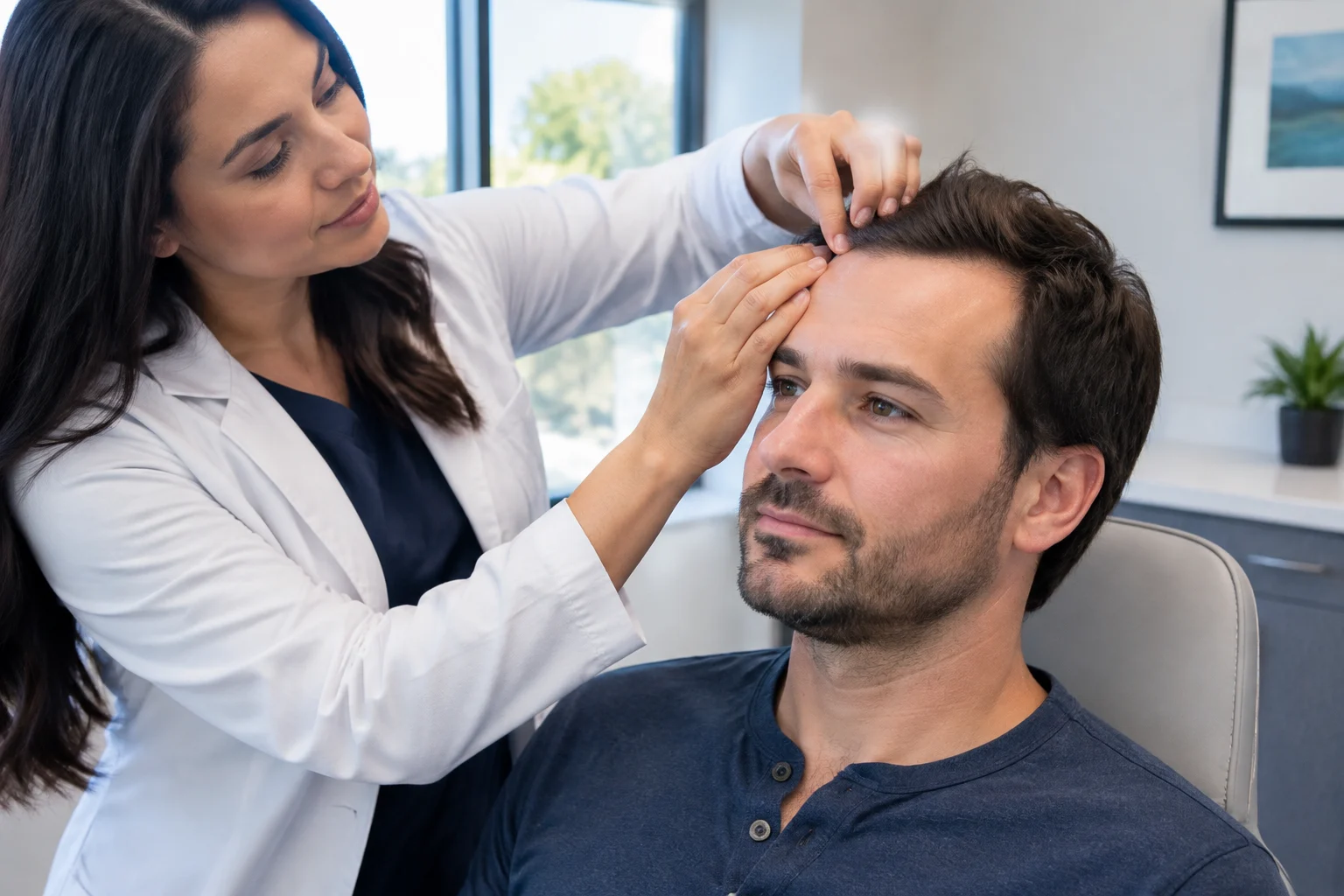
Starting your hair transplant search
If you live in Paloma Creek South, you can explore hair transplant care by contacting providers that serve North Texas and asking about their consultation process. A consultation helps determine whether transplantation may suit your type and pattern of hair loss. It also gives you a chance to understand the provider’s qualifications, the procedure, possible risks, and the follow-up care involved.
Hair restoration is a personal medical decision. A responsible provider should review your medical history and examine your scalp before recommending a plan. They can explain whether your hair loss appears stable, whether you have enough donor hair, and what results may be realistic for your individual situation. A transplant does not stop all future hair loss, so the discussion may also cover ways to manage ongoing thinning.
What to ask at a consultation
Use the appointment to gather clear information rather than focusing only on before-and-after images or promotional claims. Consider asking:
- Who evaluates patients and performs the procedure, and what training and experience do they have?
- Am I a suitable candidate, and what factors could make surgery inappropriate for me?
- Which approach, such as follicular unit extraction (FUE) or follicular unit transplantation (FUT), might be considered, and why?
- What are the likely benefits, limitations, risks, recovery expectations, and follow-up requirements?
- Where would the consultation, procedure, and follow-up visits take place?
- What is included in the quoted cost, and what additional expenses might apply?
Planning care from Paloma Creek South
Before booking, confirm the provider’s current service area and appointment locations. A practice may offer an initial consultation remotely or in person, while requiring an in-person evaluation or procedure at a separate location. Ask whether remote appointments are appropriate for your situation, how examinations are handled, and how postoperative questions and check-ins are managed. Do not assume a provider has an office in Paloma Creek South unless the practice confirms it.
Travel planning is part of choosing care. Check the expected number of visits, appointment timing, transportation needs, and any instructions for getting home after a procedure. If you may need help during recovery, discuss that in advance with the provider and someone you trust. Request written preparation and aftercare guidance so you can plan time away from work and everyday responsibilities.
Understanding treatment and recovery
Hair transplantation generally involves moving hair follicles from a donor area to areas affected by thinning. The exact technique, procedure time, and recovery experience vary by patient and provider. Your clinician should explain what to expect before, during, and after treatment, including wound care, activity restrictions, follow-up visits, and when changes in hair growth may become noticeable. Results take time, and outcomes cannot be guaranteed.
Compare providers on the quality and clarity of their medical evaluation, not just convenience or price. Be cautious of guaranteed results, pressure to make a quick decision, or unclear answers about who will perform the surgery. A careful consultation can help you decide whether a transplant is appropriate or whether another approach better fits your needs.
Taking the next step
To access hair transplant care from Paloma Creek South, identify providers serving the region, verify their credentials, and ask about consultation and procedure locations. Bring a list of questions and share relevant health information openly. With a clear understanding of candidacy, costs, travel, and aftercare, you can make an informed decision about whether hair restoration is right for you.
Hair Restoration Planning for Paloma Creek South
Paloma Creek South residents exploring hair restoration can start with a consultation from a qualified provider who serves the surrounding North Texas area. Since a provider’s consultation office, surgical location, and follow-up arrangements may not all be in the same place, confirm each detail directly before making plans. Asking about appointment options and travel requirements early helps you compare care realistically and avoid assumptions about local availability.
A hair transplant may appeal to people seeking a lasting way to address certain patterns of hair loss, but candidacy and results vary. A thorough medical assessment can help establish whether surgery is suitable, what outcome is realistic, and whether other treatments should be considered. The service fits local needs when patients can get clear guidance, plan visits around work and family responsibilities, and understand how follow-up care will be provided. Take time to compare qualifications, communication, and aftercare as well as cost and convenience.
Frequently Asked Questions About Hair Transplant in Paloma Creek South, Texas
How do I know whether I’m a good candidate for a hair transplant?
Candidacy depends on the cause and pattern of hair loss, the amount and quality of donor hair, your health, and your expectations. A clinician should assess your scalp and medical history before recommending surgery. Hair loss that is still progressing may need to be managed first, since a transplant does not stop future thinning. For someone considering treatment near Paloma Creek South, a consultation can clarify whether surgery, medical treatment, or another approach is more appropriate.
What happens during a hair transplant consultation?
A consultation usually includes a discussion of your goals, hair-loss history, medications, and relevant health conditions, along with an examination of the scalp and donor area. The clinician can explain suitable techniques, likely limitations, recovery considerations, and what further evaluation may be needed. Bring a list of medications and questions, and mention any previous hair-loss treatments. Use the appointment to understand the plan and alternatives rather than feeling pressured to make a decision immediately.
What is the difference between FUE and FUT hair transplantation?
FUE removes individual follicular units from the donor area, while FUT removes a narrow strip of scalp that is divided into grafts. Both methods move hair follicles to areas affected by loss, but they differ in how donor hair is collected and in the resulting scar pattern and recovery considerations. The best fit depends on your scalp, hairstyle preferences, donor supply, and treatment goals. Ask the clinician to explain the trade-offs for your specific situation.
How long does recovery take after a hair transplant?
Recovery varies with the procedure and individual healing. Clinics typically provide instructions on washing, sleeping, activity, and protecting the grafts during the early healing period; follow the plan given by your care team. Scabbing, tenderness, or temporary redness may occur, and you should ask what symptoms warrant a call. Before scheduling, discuss time away from work or exercise, especially if your routine involves strenuous activity or exposure that could irritate the scalp.
When will I see results from a hair transplant?
Visible growth takes time, so a transplant should not be viewed as an immediate change. Transplanted hairs commonly shed during the early healing phase before new growth develops over subsequent months, and the appearance continues to mature. The timeline differs by person and procedure. Ask your clinician what stages to expect and when follow-up is recommended. They can also discuss how ongoing hair loss in untreated areas may affect the overall appearance over time.
How much does a hair transplant cost near Paloma Creek South?
The cost depends on factors such as the treatment method, the number of grafts recommended, the clinician’s plan, and what care is included. There is no reliable way to estimate your individual total without an assessment, and a low advertised amount may not cover every part of treatment. Request a written breakdown of fees, follow-up care, and any potential additional costs. Compare plans based on suitability and clarity, not price alone.
Will a hair transplant stop my hair from thinning further?
A transplant relocates follicles to selected areas; it does not prevent existing hair from continuing to thin. A clinician may discuss medical options or monitoring to help manage ongoing loss, depending on your health and circumstances. Ask how a treatment plan would account for future changes and whether maintenance is recommended. Planning ahead matters because transplanted hair and native hair can behave differently, and the long-term appearance may depend on preserving the surrounding hair.
What should I look for when choosing a hair transplant provider?
Look for a provider who explains candidacy, risks, alternatives, expected limits, and aftercare in clear language, and who gives you time to consider the decision. Ask who performs each part of the procedure, how your donor area will be managed, and how complications or concerns are handled. Review relevant training and experience directly, and seek a second opinion if anything feels unclear. These questions are useful whether you are comparing options in Paloma Creek South or elsewhere.