
Hair Transplant Questions Answered for Dallas Patients
If you are researching hair transplant options in Dallas, it is natural to have questions about candidacy, techniques, recovery, cost, and what results may look like over time. Hair transplantation typically involves moving hair follicles from a donor area to areas affected by thinning or hair loss, but the right approach depends on factors such as the pattern and cause of hair loss, donor supply, health history, and personal goals. A consultation with a qualified medical professional can help clarify whether surgery is appropriate and what alternatives may be worth considering. Patients often compare techniques such as follicular unit transplantation and follicular unit extraction, while also asking about anesthesia, scarring, time away from work, and aftercare. Results develop gradually, and outcomes vary; a provider should explain realistic expectations rather than promise a particular density or appearance. When evaluating Dallas-area providers, ask who performs each part of the procedure, what training and experience they have, how fees are structured, and what follow-up care is included. This guide introduces common hair transplant questions so you can prepare for an informed conversation and make decisions suited to your needs.
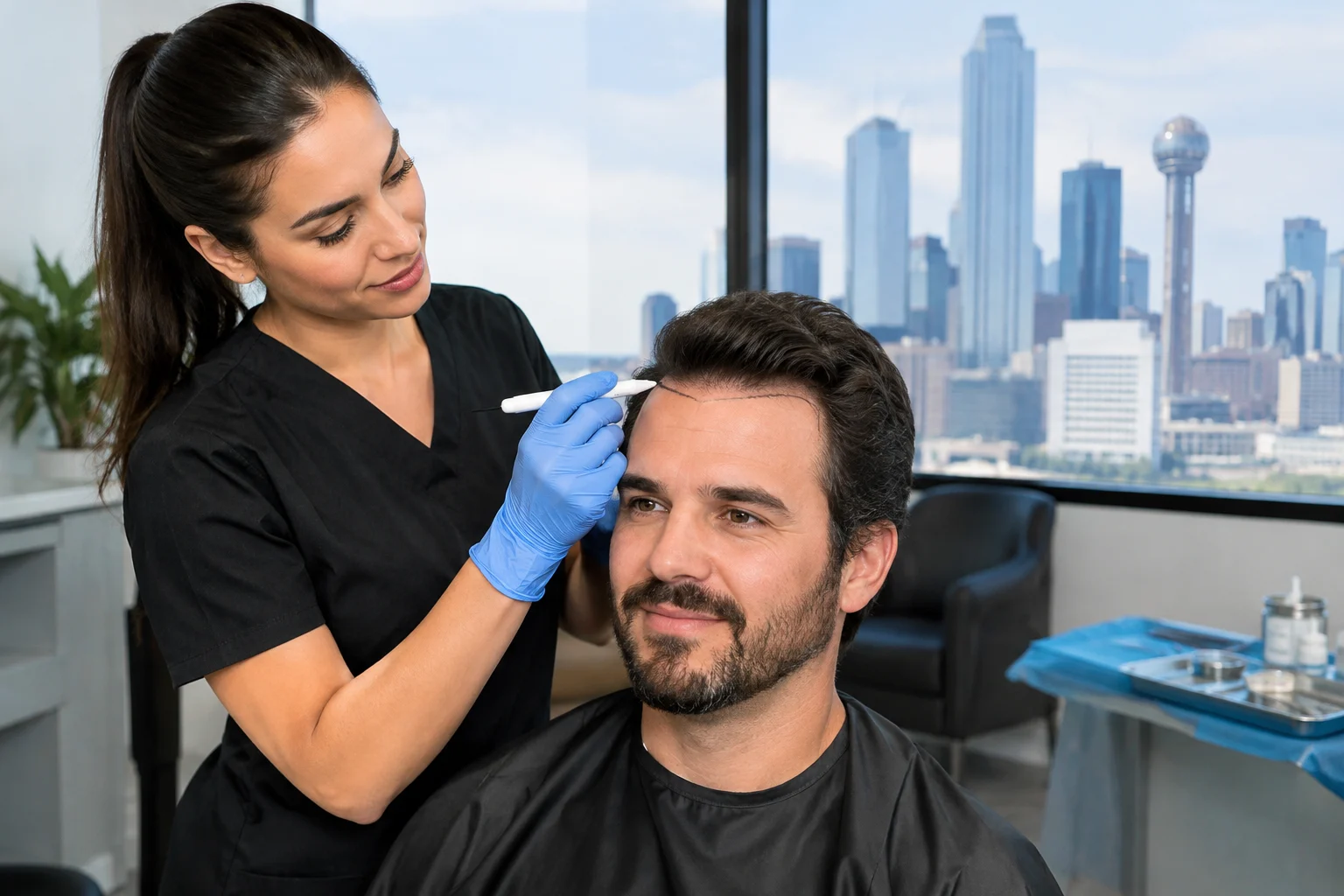
Hair loss can affect people in different ways, and a hair transplant is not the right solution for everyone. Understanding the process before arranging a consultation can help Dallas patients ask informed questions and make decisions that fit their needs, health, and expectations.
How a hair transplant works
Hair transplantation moves hair follicles from a donor area, often at the back or sides of the scalp, to areas with thinning or loss. The two commonly discussed surgical approaches are follicular unit extraction (FUE) and follicular unit transplantation (FUT). In FUE, follicles are removed individually. In FUT, a strip of scalp is removed and separated into follicular units. A clinician can explain which methods are offered and whether either is appropriate for an individual patient.
The procedure is typically planned around the pattern of hair loss, the available donor hair, and the desired coverage. Results develop over time rather than immediately, and the amount of coverage possible varies. A consultation should include a realistic discussion of limitations, potential risks, and the possibility that hair loss may continue in untreated areas.
Who may be a candidate?
Candidacy depends on factors such as the cause and stability of hair loss, donor hair supply, scalp health, medical history, and personal goals. A transplant may not be recommended when hair loss is still changing rapidly, donor hair is limited, or another health issue needs attention first. Some people may benefit from non-surgical options or a medical evaluation instead. Avoid relying on a photo, online quiz, or general description as a diagnosis; an in-person assessment by an appropriately qualified clinician is important.
What to ask during a Dallas consultation
Use the appointment to understand both the medical plan and the practical details. Ask who evaluates you, who performs each part of the procedure, what training and experience the clinical team has, and what follow-up is included. Request an explanation of the recommended technique and why it suits your situation. It is also reasonable to ask about risks, expected healing, costs, and what happens if your hair loss changes.
- What results are realistic for my donor hair and pattern of loss?
- What are the possible complications, and how are concerns handled?
- What are the total fees, and which services or follow-up visits are included?
- What written aftercare instructions and contact options will I receive?
Compare answers carefully and take time to decide. Be cautious of pressure to book quickly or promises of guaranteed density or results. A trustworthy consultation should allow you to discuss alternatives and understand the limits of surgery.
Planning treatment and recovery
Before treatment, follow the clinic’s instructions about medications, health conditions, and preparation. Share a complete medical history and ask before changing any prescribed medication. Arrange your schedule so you can follow aftercare guidance and attend recommended check-ins. The specific recovery plan varies by technique and individual circumstances; ask when you can return to work, exercise, and usual hair-care routines.
Dallas patients may be comparing providers across a wide metropolitan area. Confirm the consultation location and procedure arrangements directly with the provider, and consider travel time, parking or transportation, and how you will get home if advised not to drive after treatment. If you are coming from outside the immediate area, ask how follow-up is managed and whom to contact after returning home. Do not assume that a remote consultation replaces an examination when one is needed.
Costs and next steps
The price of a hair transplant can depend on the proposed procedure, the amount of work involved, the clinical setting, and what care is included. Request an itemized estimate and ask about payment terms before making a decision. Insurance coverage varies, so check directly with your insurer and the provider rather than assuming the procedure is covered.
For people considering a hair transplant in Dallas, a careful first step is a professional evaluation—not a commitment to surgery. Bring your questions, learn about all reasonable options, and choose a plan only after you understand the expected benefits, limitations, costs, and follow-up requirements.
Considering Hair Restoration in Dallas
Dallas residents can explore hair restoration by arranging an evaluation with a qualified hair-loss or surgical professional and confirming the details directly with the provider. Because hair loss has many possible causes, a proper assessment can help distinguish whether a transplant may be suitable or whether medical treatment, monitoring, or another approach should be considered. Patients should feel comfortable asking about credentials, the procedure team, expected outcomes, risks, fees, and aftercare before deciding.
The Dallas area covers a broad region, so planning the practical side of care matters as well as choosing a treatment. Check where consultations and procedures take place, how follow-up visits are handled, and how much time to allow for travel and recovery. If you live outside central Dallas or are traveling from elsewhere in the metro area, ask whether appointments can be coordinated and what support is available after treatment. A local evaluation can make it easier to discuss your goals and plan follow-up, while clear communication helps ensure you know what to expect before, during, and after a hair transplant.
Frequently Asked Questions About Hair Transplant in Dallas, Texas
Am I a good candidate for a hair transplant in Dallas?
Candidacy depends on the cause and pattern of hair loss, the amount of healthy donor hair available, your general health, and your expectations. A clinician should assess your scalp and medical history before recommending surgery. Some people benefit from waiting until hair loss is more stable, while others may need medical treatment or another approach instead. During a consultation in Dallas, ask how your donor area and likely future hair loss affect the plan.
What is the difference between FUE and FUT hair transplant methods?
FUE removes individual follicular units from the donor area, while FUT removes a narrow strip of scalp from which follicular units are prepared. Both methods aim to move hair follicles to areas with thinning or loss, but they differ in how donor hair is collected and in the type of scarring they can leave. The right option depends on your scalp, hairstyle preferences, donor supply, and treatment goals. Ask a qualified clinician to explain the trade-offs for your case.
What should I expect at a hair transplant consultation?
A thorough consultation typically includes a discussion of your hair-loss history, health, medications, goals, and expectations. The clinician should examine your scalp and donor area, explain suitable options, and discuss limitations, risks, recovery, and likely long-term planning. Bring a list of medications and questions, and mention any prior hair-loss treatments. If you are comparing providers in Dallas, consider whether the explanation is individualized and whether you have time to make an informed decision.
How much time should I take off work after a hair transplant?
Time away from work varies with the procedure, your recovery, and the nature of your job. You may have visible redness, scabbing, or swelling during early healing, so consider whether your work involves public-facing duties, strenuous activity, or protective headwear. Follow the treating clinic’s instructions about washing, exercise, and avoiding pressure on the grafts. Before scheduling around work in Dallas, ask your clinician what recovery commonly involves for the specific technique planned.
When will I see results after a hair transplant?
Hair transplant results develop gradually rather than immediately. Transplanted hairs commonly shed during early healing, and new growth takes time to emerge and mature. The timeline varies among individuals, and the final appearance may take many months to assess. Your clinician should explain what changes to expect at each stage and how follow-up is handled. Take progress photos under consistent conditions, and contact the care team if symptoms or healing concerns differ from the instructions you received.
How is the cost of a hair transplant determined?
The cost depends on factors such as the extent of hair loss, the number of grafts recommended, the technique, and what care is included. A personalized assessment is needed before comparing estimates; a low graft count or headline figure may not describe the full plan. Ask for an itemized explanation of fees, follow-up, and any separately charged services. In Dallas, compare the proposed treatment plan and clinician’s explanations rather than choosing solely by price.
Will I need medication or another transplant as hair loss continues?
A transplant redistributes existing follicles; it does not stop untreated hair from thinning elsewhere. Because hair loss can progress, a clinician may discuss medical therapy, monitoring, or future planning alongside surgery. Whether medication is appropriate depends on your health and the cause of hair loss, so do not start or stop treatment without medical advice. Ask how the proposed hairline and donor-hair use account for possible future changes, not just your current appearance.
What questions should I ask before choosing a hair transplant provider in Dallas?
Ask who evaluates you, who performs each part of the procedure, and how the proposed plan fits your hair loss and donor supply. Request a clear discussion of risks, scarring, expected recovery, likely limitations, and follow-up arrangements. You can also ask how the provider handles complications and whether non-surgical options may be appropriate. Take time to review the answers and avoid pressure to book immediately; a careful decision should be based on your needs and a realistic plan.